
4 Common Gamification Mistakes That Quietly Kill Engagement

Most event games don’t fail because of bad technology. They fail because of a few avoidable mistakes.
After building hundreds of event games over the past 18 years, we’ve seen the same issues quietly reduce engagement again and again.
In this post, we’ll break down four of the most common gamification mistakes and how to avoid them.
The 4 most common issues that quietly hurt game performance:
- Lack of planning
- Lack of promotion
- Too complex
- Ineffective rewards
If you’ve ever had a game fall flat, it was probably because of one or more of these. Let’s start with the most common issue: planning.
Gamification Mistake #1: Lack of Planning
Behind every successful event and game is thoughtful planning.
We understand that sometimes you simply don’t have the time. We can build games very quickly when needed. But when you do have the time, planning dramatically increases the chances of success.
Common planning issues we run into are:
- Rushing the setup
- Not defining the goals
- Not integrating the game into the event
- Ignoring the data from previous events
How much time do you need? If you’ve worked with SocialPoint, you’ve seen a timeline similar to this example game build timeline:
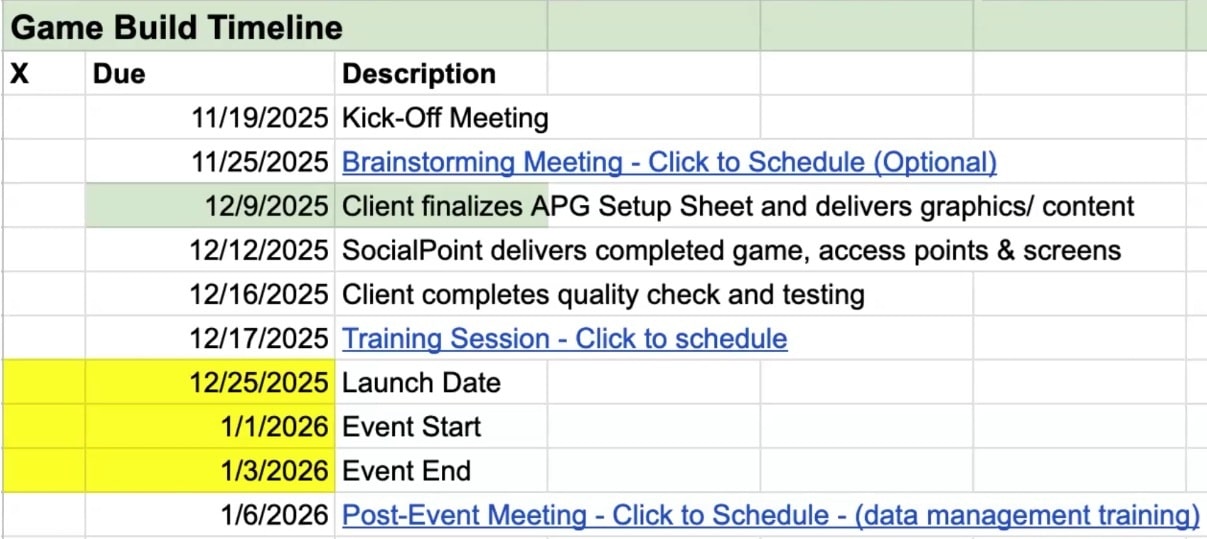
Ideally, for a conference starting on January 1st, we begin kickoff around mid-November. In this example, we might want to start a little bit earlier, knowing that there are a few holidays between now and then that might hinder us while reaching our goals.
Again, we can do it faster, but proper planning sets everything up for success. And this is only the SocialPoint timeline. You should consider how gamification will be woven into your event or conference early in the planning process. The more time you can give yourself, the better.
Essential considerations for planning your event gamification include determining your goals, choosing your game challenges, and plotting out your entire player journey.
Goals by Event Type
Here are some examples of goals you may have depending on the type of event or activation you have:
- Increase Engagement
- Reinforce Key Messages or Objectives
- Influence Behaviors
- Boost Value to Shareholders
- Collect Rich Data
Which of those goals matter most to your event? We’ve found that it depends a lot on what kind of corporate event you are hosting. Based on our experience, this chart provides a good starting point for how each event’s goals match up.

The darker the orange square, the more important the goal might be to your specific event type. It’s no guarantee for your specific event, but this is what hundreds of our clients have told us.
Now that we’ve considered our goals, it’s time to choose the right game challenges. We’ve created a chart of game challenges and goals that they align best with.
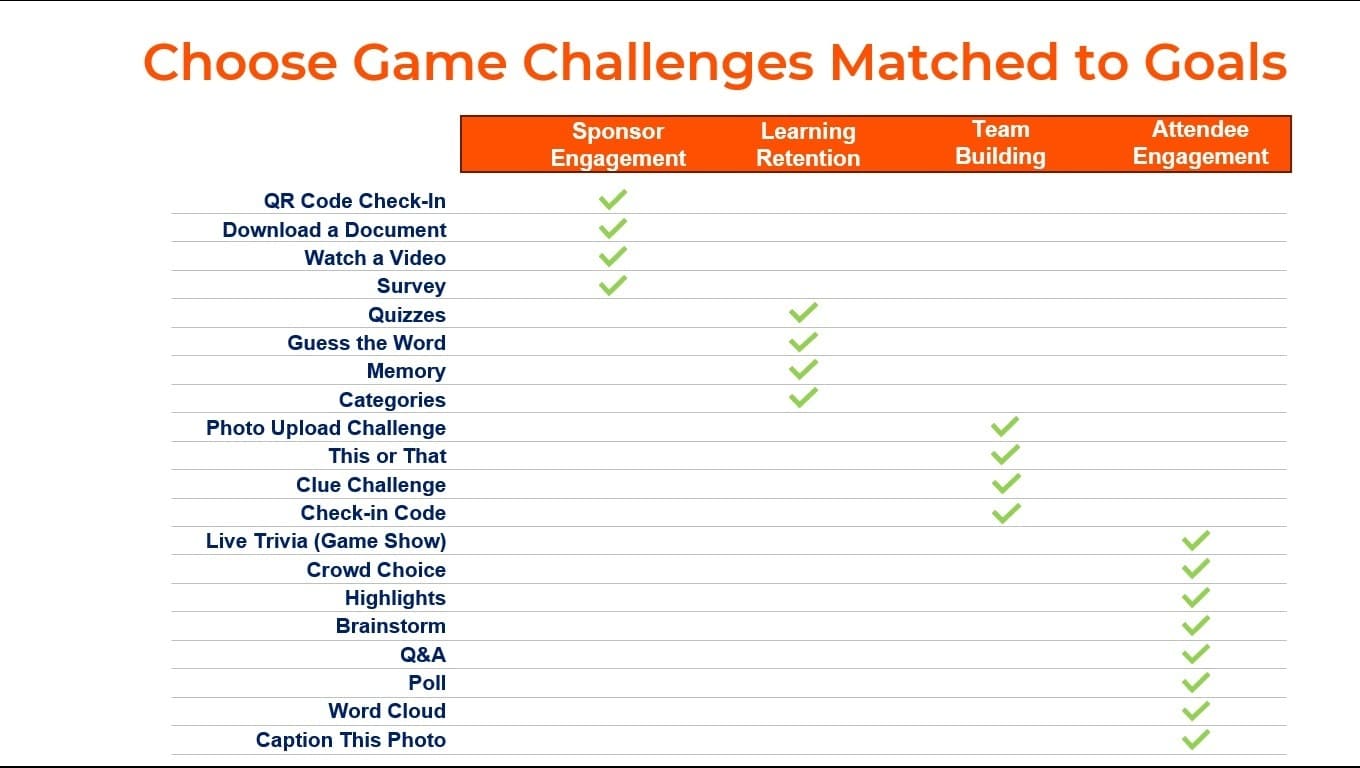
You can see which challenges align best with which corporate event game goals:
- Sponsor Engagement: If you want your attendees to visit and engage with your corporate sponsors, give attendees QR Code Check-In challenges. And for greater sponsor engagement, give attendees points for watching a sponsor’s video or downloading their documents.
- Learning Retention: Obviously Trivia and Quizzes help reinforce learning objectives. But did you know that you can also do that with a Guess the Word or a Memory challenge?
- Team Building: To get people talking to each other, add our Photo Upload or This or That challenges, which help break the ice and create greater camaraderie.
- Attendee Engagement: To keep attendees engaged, challenges like Crowd Choice (that lets attendees vote) or Highlights (that lets attendees give shoutouts to their favorite event moments, ideas, and people) focus people during moments you want.
Some challenges are also useful in achieving additional corporate event goals, but our chart shows where they help them most. We can give you further guidance in a call.
Define the Player’s Journey
Planning starts with understanding the player’s journey for the game. Here are key steps to the journey, and questions that help you define it:
- Introduce players to the game
- How do you plan to introduce and market the game?
- How (and where) will players access the game to get started?
- Players complete challenges
- What behaviors or objectives do you want to incentivize?
- Which challenges should be high, medium, and low value?
- Winning the game
- Define how players “win” the game
- Will there be a single or multiple rewards?
- What are the prizes?
- How will you distribute prizes?
- Concluding the game
- How will you end the game?
- How will winners be announced?
These are great questions to start with before beginning to plan your game, knowing how this game will interact with your players.
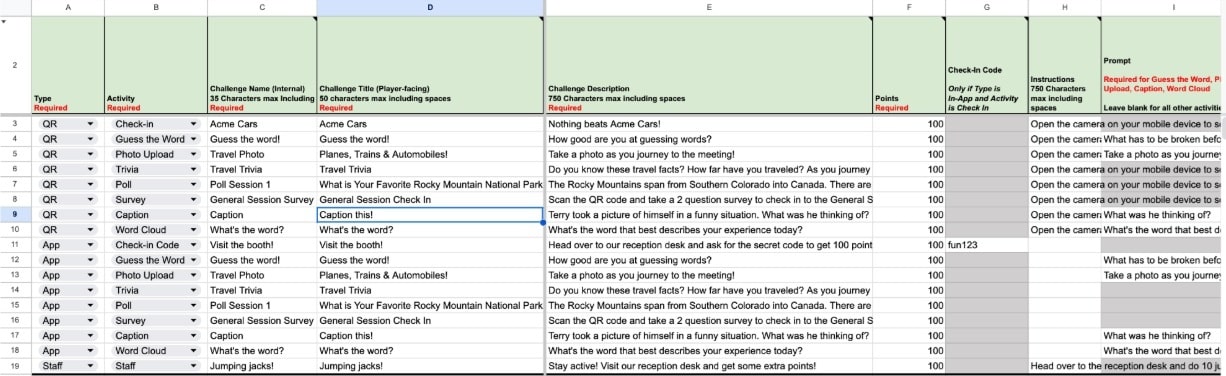
When we plan a game with our clients, we also love having everything laid out visually – all the challenges, all the days, all the categories – so that you can see the full experience before you start building. This helps you to balance things out, spot gaps, and create a smoother flow.
Here’s a detailed view of a game plan:
So how can we fix the number one issue we see, which is lack of planning?
- Give yourself enough time when you can
- Set clear goals
- Review your past event data
- Be intentional
- Map out the full experience first
- Decide what it actually means to win
Gamification Mistake #2: Lack of Promotion
The second issue we see is lack of promotion of the game. Even the best game won’t perform well if people don’t know about it.
Promoting the game is essential before and during the event, and even inside individual sessions.
Attendees are distracted and overwhelmed, not just by work and home, but also by the different messages that you want them to see happening at your own event or conference.
Here are some easy promotion ideas
Some of these can be subtle, continuous reminders of the game that encourage more interaction and remind them, “Don’t forget to play!”
- Pre-event emails that mention the game and rewards will get attendees excited about the game before they even arrive.
- Mention it during the opening session. That’s a great time to show a screenshot on the screen of what the game looks like or how you access it, and maybe a photo of the key prizes. Clear directions on how to access the game are important.
- On-site signage that mentions the game throughout different areas.
- Push notifications (if you’re using a mobile event app) that remind them about the game, and each day ask them to check out the game for new challenges that might be revealed.
- Mention your game, with screenshots of the game, in your walk-in slides, and maybe also before each breakout.
- Revisit leaderboard/photos in general sessions, with photos or leaderboards embedded into slides to highlight who’s on top of the leaderboard still. Or maybe spinning a raffle wheel in a general session to keep things exciting.
- Promote your event game in your social media posts, if it’s a game that’s more public, like a digital booth passport.
- Have a game evangelist at your event. This can be someone who is dedicated to trying to get as many people in the game as possible. Perhaps it can even be last year’s game winner so that you can have a new winner this year. Your game evangelist’s role is to encourage people to play, help them, and maybe they get something for that, like their own little reward.
- Finally, train your staff with talking points to make sure that they can answer any questions and that they themselves are also encouraging people to play the game.
Thus, promote your game to boost its success. One mention is not enough. Games need to be visible to succeed.
Gamification Mistake #3: Too Complex
The third issue we often see is that games are too complex:
- Too many challenges
- Too many rewards
- Vague instructions/rules/directions
More challenges don’t always equal more engagement. Sometimes it just overwhelms people. If players feel unsure of where to start, they often won’t start at all.
So, keep it simple, especially for your first year. You may want to select a few different challenges that you focus on and subtly train your attendees on some of those challenges before they arrive at the event.
For example, if you know you’re going to have photo and trivia challenges, maybe have a pre-event trivia challenge on the host city. Or as they journey to the event, you ask them to take a photo challenge about their trip. That subtly trains them but also rewards them with getting points.
Simplify the game
Here are a few tips to simplify your game so it’s more likely to succeed:
- Focus on just a few challenge types, so attendees have less to learn to play. Choose the challenge types best aligned with your audience and goals.
- Clarify how to win. Early training in the challenges to show people how it works.
- Clear instructions, to the point you can explain how to win in one sentence. If there are many ways to win, that’s great, but it’s got to be easy to understand.
- And release challenges gradually throughout the event when possible, so that they might not be overwhelmed with a really long list of things to do.
Your attendees shouldn’t have to guess what to do. The easier you make the experience, the more people will participate.
Gamification Mistake #4: Ineffective Rewards
Our final issue that we see when games fail is ineffective rewards, which usually boils down to these concerns:
- No reward: Rewards do matter, and they need to match the level of effort that you expect when playing the game.
- Low value reward: A reward that’s too small probably won’t motivate most people.
- Unsure how to win: Make sure the players know what the rewards are as well. Put them in the instructions. Mention them from the stage. Put them on signage. Don’t keep them a mystery. It definitely should be part of the process.
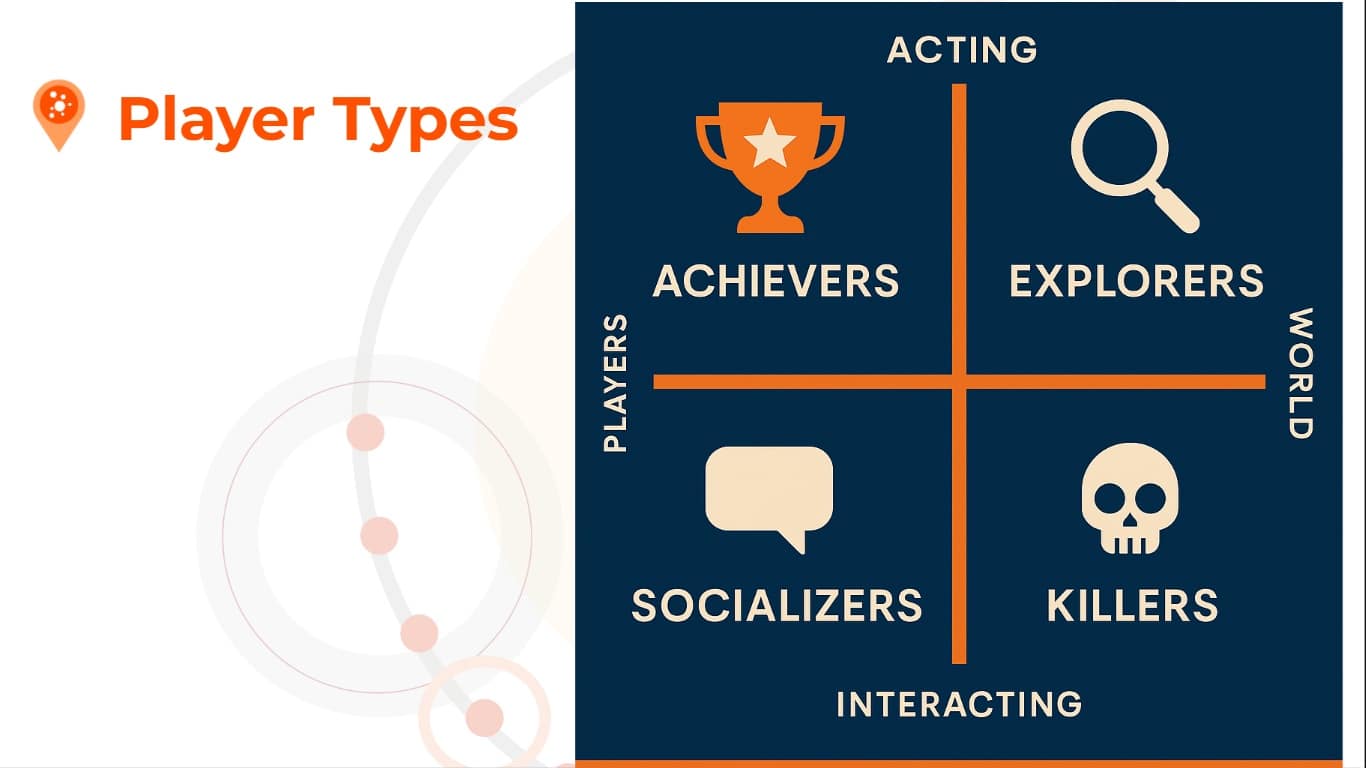
- Motivate only 1 type of player: Different types of people are motivated by different types of things. Dr. Richard Bartle identified 4 main player types.
- The biggest group is the socializers, and they’re looking for networking activities.
- There are also achievers who are goal-oriented
- Explorers who are curious and knowledge-driven, so they use the game to learn about the event around them.
- And then there’s killers. They’re competitive, and they have a real drive to win and run up those leaderboard scores. Thus, the leaderboard is often appealing to the killers. And most games unintentionally focus on the killers, which is actually the smallest group of player types. Killers love the leaderboard, but they can also affect other player types and discourage them from playing.
- If all you offer is one path to win, you miss opportunities to motivate the three other player types. To reach everybody, use the leaderboards for killers, use raffles for socializers, maybe some progress-based achievements for achievers, and use trivia or discovery challenges for explorers. Often, multiple ways to win keep more people engaged throughout your event. Just make sure it’s easy to communicate.
Rewards should be meaningful. They should be clear. They should be motivating for different player types. And use a mix of short-term and ongoing rewards.
A strategy we love is offering a raffle drawing for anybody who completes all the pre-event challenges. It creates early momentum and helps train people on the game. And it shows people winning early in the event or conference.
Avoid common gamification mistakes and design your corporate event game for success
Avoiding these common mistakes can dramatically improve participation, engagement, and overall event success.
The key is simple: plan intentionally, promote consistently, keep it easy to play, and design rewards that truly motivate.
If you’d like to discuss with our experienced team how to design your corporate game for greater success, you can ask for a meeting here.